
Which goal does each video serve for an event?
A promo video aims to drive ticket sales, sponsor interest, and awareness before the event. An aftermovie aims to capture the atmosphere, reward attendees, and build momentum for the next edition. Promo content persuades; aftermovie content celebrates and proves.
A promo video answers the question “Why should I be there?” It highlights the lineup, the setting, and the promise of the experience. Because the event has not happened yet, it often leans on previous footage, announcements, teasers, and artist content.
An aftermovie answers “What did it feel like?” It works as social proof for future audiences, a thank-you to attendees, and a showcase asset for partners and sponsors. A strong aftermovie often becomes the best promotional material for the following year.
- Promo video: drives ticket sales, announces the lineup, and builds anticipation.
- Aftermovie: preserves the memory, rewards attendees, and sells the next edition.
When should each video be released in the event timeline?
Promo videos go out in the weeks and months before the event, ideally in waves that follow the ticketing and lineup announcement schedule. Aftermovies are released after the event ends, typically within days to a few weeks, while the emotion and online conversation are still fresh.
Promo content usually works best as a sequence rather than a single release. A first teaser may support the initial announcement, a lineup video can follow, and a final push can land close to the event date.
Aftermovie timing is a balance between speed and quality. Releasing quickly keeps attendees engaged, but rushing the edit can hurt the result. Many organizers plan a short social cut for immediate release and a longer, more polished edit shortly after.
A typical timeline looks like this:
- Announcement teaser during early ticket sales.
- Lineup or program reveal video.
- Final countdown promo close to the event.
- Short highlights or day recaps during the event.
- Full aftermovie released after the event.
How does the filming approach differ between the two?
Promo videos are planned and often partly staged, using controlled shoots, archive footage, and designed visuals. Aftermovies are captured live during the event, with multiple cameras following the crowd, performers, and atmosphere. The first is built from a script or concept, the second from what actually happens.
For a promo, production can happen weeks in advance. You can shoot at the venue before opening, film with artists, use motion graphics, or repurpose previous-year material. Control over lighting, framing, and timing is high.
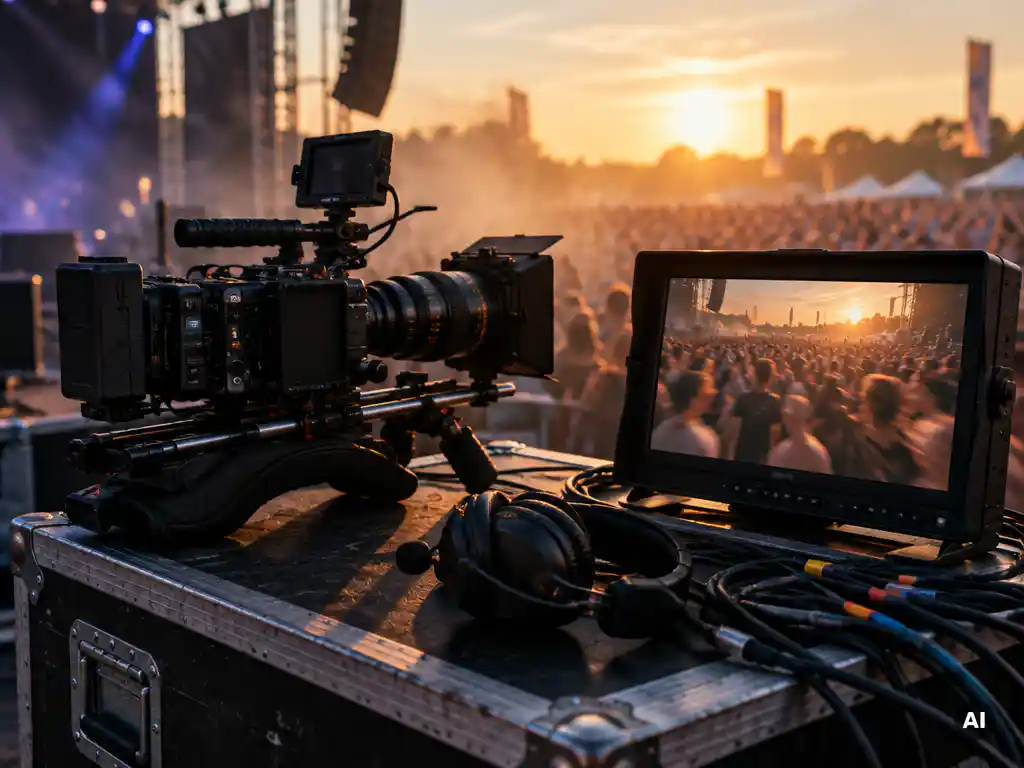
For an aftermovie, nothing can be repeated. Camera positions, operator briefings, and shot lists must be planned in advance because the crowd and the show will not wait. Many productions today use large-sensor cameras for a cinematic look, stabilized rigs, and drones, and increasingly shoot vertical-native footage alongside standard formats so the content works on mobile-first platforms.
Our work on Tomorrowland shows how large-scale live capture demands careful planning across stages and camera teams. Coordination matters as much as equipment.
Where should each video be distributed?
Promo videos should live where ticket buyers decide: social media ads, the event website, email campaigns, and partner channels. Aftermovies work best on YouTube, Instagram, TikTok, and the festival’s own channels, where attendees share them and new audiences discover them organically.
Distribution should match viewing behavior. Promo content often needs short, platform-specific cuts, such as vertical versions for Stories and Reels, and 15- to 30-second edits for paid campaigns. A clear call to action, such as a ticket link, belongs in nearly every version.
Aftermovies benefit from a longer shelf life. A full-length edit can anchor the event page and YouTube channel, while shorter vertical cuts keep circulating on social platforms. Sponsors and partners also value receiving these assets for their own channels, so planning delivery formats early saves time.
What do aftermovies and promo videos typically cost?
Costs vary widely depending on crew size, number of cameras, shooting days, edit complexity, and delivery formats. Neither video has a fixed price. A simple promo from existing footage costs far less than a multicamera aftermovie covering several stages over multiple days.
The main cost drivers are consistent across both formats:
- Crew and cameras: more stages and shooting days mean more operators and equipment.
- Specialty gear: drones, stabilized heads, and large-sensor cinema setups add to the budget.
- Post-production: editing, color grading, sound design, and multiple deliverable formats.
- Rights and clearances: music, artist, and performance rights can affect scope and delivery.
Promo videos can be cost-efficient when they reuse existing material. Aftermovies carry higher live production costs because everything is captured in real time. The most useful approach is to request a quote based on a clear brief that defines length, formats, and delivery dates.
Should an event invest in both videos?
Yes, in most cases. A promo video and an aftermovie support different stages of the audience journey, and they reinforce each other. The aftermovie from one edition often becomes the raw material and the strongest argument for the next edition’s promo campaign.
If budget forces a choice, base it on your biggest need. A new event that must build awareness may prioritize a promo. An established event with loyal visitors may get more value from a high-quality aftermovie that deepens engagement and fuels the next ticket sale.
Planning both together is more efficient than treating them separately. Shared filming days, a unified visual style, and coordinated footage capture reduce cost and keep the brand consistent. That joined-up approach is the foundation of effective festival video production.
How CK Productions helps with festival aftermovies and promo videos
At CK Productions, we act as an independent technical production partner for music festivals and live events. We select the right crew and equipment for each project, so the footage fits your goals instead of a fixed setup.
- Multicamera and cinematic large-sensor filming for aftermovies and recaps
- Vertical-native video for mobile-first promo and social campaigns
- Livestreaming, multi-stage coordination, and live screen production
- Media management, post-production, and delivery in the formats each platform needs
We work as an extension of your internal team, handling the technical complexity so you can focus on the event itself. Planning an aftermovie or promo for your next edition? Contact us and tell us about your project.
Frequently Asked Questions
How far in advance should I start planning my aftermovie?
Start planning your aftermovie at the same time as your event production, ideally 2 to 3 months out. You’ll need time to define the creative direction, brief camera operators, build a shot list for each stage, and secure music and performance rights. Since nothing can be re-shot after the festival ends, early planning is the best insurance for a strong final edit.
What should I include in a brief when requesting a quote for a promo video or aftermovie?
A clear brief should cover the event dates and venue, number of stages, desired video length, required formats (16:9, vertical 9:16, short social cuts), and delivery deadlines. Also mention your goals, reference videos you like, and any known music or artist clearance constraints. The more specific the brief, the more accurate and comparable your quotes will be.
Can I use my aftermovie footage to create next year's promo video?
Yes, and it’s one of the most cost-efficient strategies. Aftermovie footage provides authentic social proof and can be re-cut into teasers, lineup reveals, and paid ad edits. To make this work, confirm in advance that your production agreement and any music or performer rights cover reuse in promotional campaigns.
How do I avoid delays when releasing the aftermovie?
Plan a two-step release: a fast social recap within a day or two, followed by the full, polished edit a couple of weeks later. Organize media management during the event so footage is backed up, labeled, and ready for the editor right away. Settling music licensing and approval workflows before the event also prevents last-minute bottlenecks.
What vertical video formats should I prepare, and do I need to film separately for them?
For mobile-first platforms like Instagram Reels, TikTok, and Stories, 9:16 vertical is the standard. Reframing horizontal footage often cuts out important details, so it’s better to have dedicated vertical-native cameras or operators capturing alongside your main crew. This gives you content composed specifically for mobile viewing rather than cropped as an afterthought.
How can I get sponsors involved in my aftermovie or promo content?
Discuss sponsor needs during pre-production so their branding, activations, and key moments are included in your shot list. Offer them tailored deliverables, such as short cuts or vertical edits for their own channels. Presenting the aftermovie as a showcase asset helps justify sponsorship value and can make renewals easier.
What are the most common mistakes when producing festival videos?
The most frequent mistakes are skipping the shot list and operator briefings, underestimating post-production time, and ignoring music or artist rights until the edit is finished. Another common issue is only planning a single widescreen version and then struggling to adapt it for social platforms. Defining formats, deadlines, and clearances up front avoids most of these problems.