
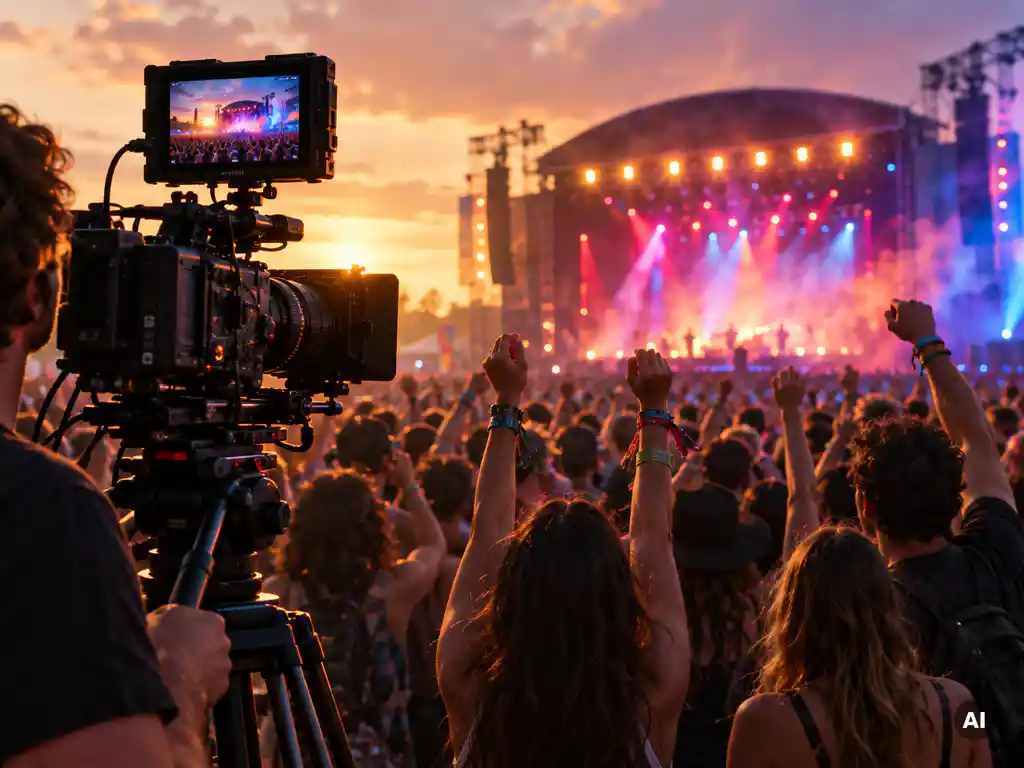
Yes, festival footage can help you sell more tickets next year, as long as it makes viewers feel what it is like to be there and reaches them while they are deciding. Strong footage turns a lineup announcement into an experience people want to be part of.
Footage rarely sells tickets on its own. It works best as part of a release plan, a distribution strategy, and a way to measure results. The sections below cover what convinces buyers, which formats work, and how to judge the return on festival video production.
What makes festival footage convince people to buy tickets?
Festival footage convinces people to buy tickets when it shows real emotion, real crowds, and real atmosphere. Viewers want proof that the experience is worth the price, the travel, and the time off. Footage that makes them feel present, not just informed, creates the urge to secure a place next year.
Several qualities consistently separate persuasive footage from forgettable footage:
- Authentic crowd energy: Wide shots of a packed field, faces during a peak moment, and spontaneous reactions signal that the event delivers.
- Visual quality: Cinematic imagery shot on large-sensor cameras preserves detail and dynamic range in difficult lighting, which makes the festival look as good as it feels.
- Variety of angles: Stage views, close-ups of artists, and audience perspectives help viewers imagine themselves in different parts of the site.
- Clean audio: Strong sound turns a good clip into a memorable one. Poor audio breaks the illusion immediately.
- A clear story: Even a short clip benefits from a beginning, a build, and a payoff.
The common thread is trust. A prospective buyer is judging whether the next edition will be worth it, and footage that looks polished and honest answers that question faster than any copy can.
Which types of festival footage sell the most tickets?
Aftermovies, live set recordings, and short vertical highlight clips tend to drive the most ticket interest. Each serves a different stage of the buying decision. Aftermovies build emotion and desire, live sets prove the music quality, and short clips keep the festival visible in social feeds between announcements.
Aftermovies
An aftermovie is the flagship asset. It condenses days of programming into a few minutes of emotion, scale, and sound. Because it is shareable and rewatchable, it often becomes the main piece of footage that new audiences encounter. It works best when it focuses on the feeling of the event rather than a list of acts.
Live sets and stage recordings
Full or partial live sets show what the music actually sounds and looks like on your stages. For festivals with a strong musical identity, this is powerful proof. Our long-running work with festivals such as Tomorrowland shows how recorded and streamed sets can extend an event’s reach far beyond the people who attended.
Vertical and social-first clips
Short vertical video is its own language. Clips designed natively for mobile platforms, rather than cropped from a widescreen master, fill feeds with moments that are quick to watch and easy to share. These clips are ideal for teasing next year’s edition and for keeping momentum alive throughout the off-season.
When should festivals release footage to boost ticket sales?
Festivals should release footage at several points in the year, not just once. The strongest moments are immediately after the event, when emotion is highest, and again around ticket sale windows, when buyers are actively deciding. Consistent releases in between keep the festival present in people’s minds.
A practical release rhythm looks like this:
- During the festival: Share live moments, quick recaps, and short clips while excitement is at its peak and attendees are posting themselves.
- Days after the event: Publish the aftermovie or day recaps while the conversation is still active and attendees want to relive the weekend.
- Off-season: Release live sets, behind-the-scenes content, and highlight reels to maintain interest and remind fans the festival exists.
- Before ticket sales open: Build anticipation with a teaser that connects the previous edition’s best moments to the upcoming announcement.
- During sales windows: Use the strongest footage in paid and organic campaigns while buyers are ready to act.
Timing matters because footage loses persuasive power when it is disconnected from a decision. A great aftermovie released months after the audience has moved on does far less than one released while the memory is fresh.
Where should festival footage be distributed for maximum reach?
Festival footage should be distributed across the platforms where your audience already spends time, with each version formatted for that platform. That typically means social media, your own website, video platforms, and media partners. Tailoring format and length to each channel matters more than posting everywhere with the same file.
Consider these distribution channels:
- Social platforms: Instagram, TikTok, and Facebook reward short, vertical, mobile-first clips that hook viewers in the first seconds.
- Video platforms: Longer content such as aftermovies and full sets suits platforms where viewers expect to watch more than a few seconds.
- Your own website: Embedding footage on ticket pages keeps visitors engaged and gives hesitant buyers a reason to commit.
- Media and broadcast partners: Television channels, streaming platforms, and press partners can carry highlights or live coverage to audiences you would not reach on your own.
- Livestreams: Streaming select performances lets people at home experience the event, which can convert them into attendees next year.
Distribution also depends on workflow. Footage needs to be organized, delivered in the right formats, and cleared for use, so planning media management before the event prevents delays when you need content fast.
How can you measure whether footage drives ticket sales?
You can measure footage impact by tracking how viewers move from watching a video to buying a ticket. Combine platform analytics with tracked links, campaign codes, and sales timing. The goal is to connect specific videos and release dates to changes in traffic, sign-ups, and ticket purchases.
Useful measurement approaches include:
- Tracked links and UTM parameters on every video call to action, so you can see which clips send visitors to your ticket page.
- Landing page behavior such as time on page and conversion rate for visitors who arrive from video versus other sources.
- Sales timing compared against release dates, to see whether ticket sales rise after a major video drop.
- Audience signals like watch time, completion rate, shares, and saves, which show whether footage resonates.
- Buyer surveys that ask new ticket buyers what convinced them, which adds context numbers alone cannot provide.
Keep expectations realistic. Footage influences decisions alongside the lineup, pricing, and word of mouth, so attribution is rarely perfect. Look for consistent patterns across editions rather than expecting a single clip to explain every sale.
Is professional festival video production worth the budget?
Professional festival video production is usually worth the budget when footage is central to your marketing and ticket strategy. Skilled crews capture usable content across multiple stages, deliver reliable livestreams, and produce assets you can reuse for months. The value comes from quality, coverage, and long-term use, not a single video.
The main criteria to weigh are:
- Coverage: Multi-stage events are hard to capture well without experienced crews and coordinated camera plans.
- Reusability: One professional shoot can feed aftermovies, live sets, social clips, and partner content across the year.
- Reliability: Livestreams and live screens demand robust workflows, so technical failures do not damage the experience.
- Brand perception: Polished footage signals a well-run event, which supports buyer confidence.
Smaller events do not always need a large setup. A focused plan with the right camera count and a clear content strategy can deliver strong results on a modest budget. The key is matching the production scale to your goals instead of spending on features you will not use.
How CK Productions helps with festival video production
We are an independent technical video production and broadcasting partner for music festivals, concerts, and live events. We select the right crews, cameras, and suppliers for each project, and we act as an extension of your team so you can focus on the experience.
- Multicamera and cinematic large-sensor production across single or multiple stages
- Livestreaming and broadcast delivery with robust workflows
- Live screen production (IMAG) for on-site audiences
- Vertical-native video designed for mobile-first platforms
- Media management, archiving, and distribution to partners and platforms
If you want footage that helps sell tickets next year, contact CK Productions to discuss your festival and plan a production that fits your goals and budget.
Frequently Asked Questions
How do I get started if my festival has never invested in video before?
Start by defining one clear goal, such as driving early-bird ticket sales, and build your footage plan around it. Brief a production partner on your stages, schedule, and key moments, and begin with a manageable package: a short aftermovie, a handful of vertical social clips, and organized raw footage you can reuse. You can expand into livestreams and live sets in later editions once you see what resonates.
What if I only have a small budget for festival footage?
Prioritize the assets with the longest shelf life and widest reuse. A focused crew with a clear shot list can capture crowd energy, headline moments, and clean audio, then cut one hero video plus several short social clips. Skip features you will not actually use, such as multi-stage coverage for minor stages, and concentrate your spend on the moments that best show why people should attend.
How long should an aftermovie be to keep viewers watching?
Most aftermovies perform best between roughly two and four minutes, long enough to build emotion and short enough to hold attention through to the call to action. Also create 15 to 30 second cutdowns of the strongest moments for social feeds, and a vertical version designed natively for mobile. Check your platform analytics for completion rate and adjust length in the next edition based on where viewers drop off.
What are the most common mistakes festivals make with their footage?
The biggest mistakes are releasing the aftermovie too late, relying on a single hero video, and cropping widescreen footage into vertical format instead of shooting for mobile. Other frequent issues are poor audio, no call to action or ticket link, and failing to clear music and talent rights before publishing. Planning your release calendar and rights clearance before the event avoids most of these problems.
Do I need to clear rights and permissions before publishing festival footage?
Yes, you should confirm rights for music, performing artists, sponsors, and identifiable attendees before you publish or run footage as paid advertising. Agree on usage terms with artists and their management ahead of the event, and make sure signage at the venue covers filming. Your production partner can help organize footage and documentation so approvals do not delay your release schedule.
Can livestreaming parts of the festival really convert viewers into future attendees?
It can, especially when you stream standout performances that show the atmosphere and production quality of your stages. Pair the stream with a visible ticket or newsletter sign-up link and a clear promise about next year’s edition. Track sign-ups and ticket page visits from the stream with UTM links so you can see how many at-home viewers turn into buyers over time.
How can I reuse one festival shoot throughout the year without it feeling repetitive?
Break your footage library into themes, such as artist moments, crowd reactions, behind-the-scenes, food and site design, and fan testimonials, then release them on a schedule through the off-season. Re-edit the same material into different formats like teasers, throwback clips, and lineup announcement intros. Organized archiving and tagging during the event makes it much faster to pull the right clip when you need it.