
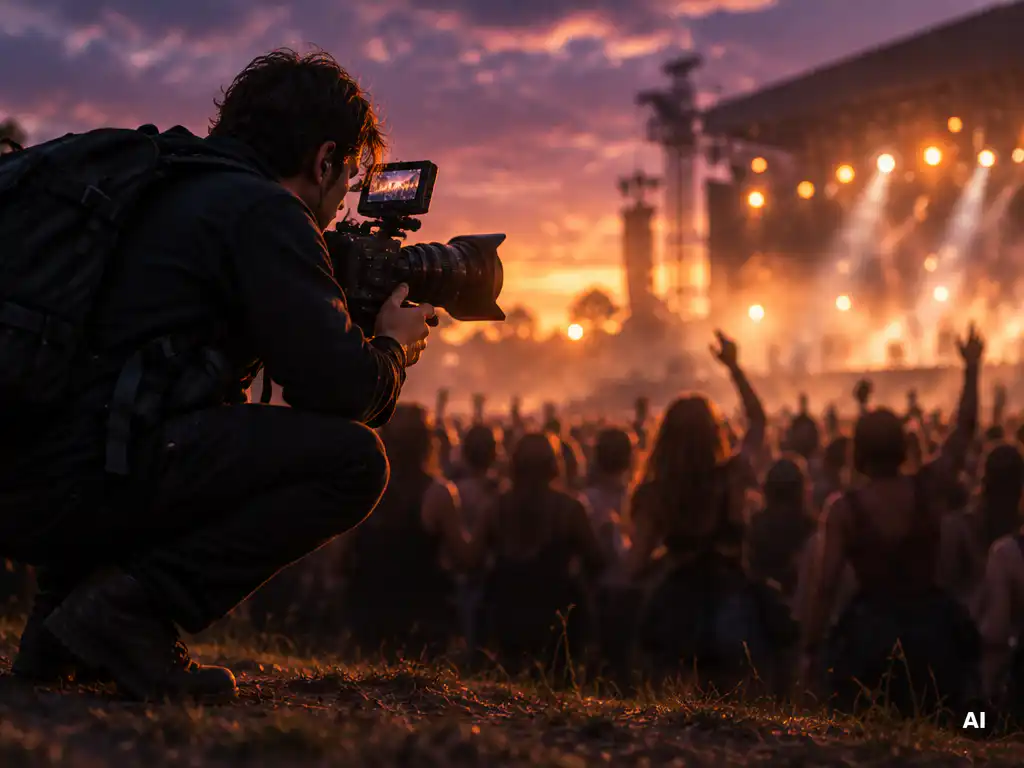
Where should cameras be positioned on a festival site?
Cameras belong where they capture the best angles without sitting in guest walkways, sightlines, or emergency routes. Elevated platforms, stage-side positions, front-of-house towers, and ceiling or truss mounts keep the crowd floor clear while still delivering wide, medium, and close perspectives of the performance.
Start with a site walk alongside the organizer, stage managers, and safety team. Mark the evacuation routes, barrier lines, and high-density zones first. Camera positions come second, and they must fit around those constraints rather than compete with them.
A reliable positioning plan usually follows this order:
- Map crowd flow, entrances, bars, and emergency routes.
- Assign fixed positions such as front-of-house, side-stage, and delay towers.
- Add elevated or suspended positions for wide and sweeping shots.
- Reserve a small number of mobile operators for the pit and designated crowd zones.
- Run a rehearsal during soundcheck to confirm that no guest sightlines are blocked.
Multi-stage festivals add another layer. Each stage needs its own camera plan, yet the whole site should feel coordinated, with shared cabling routes and consistent timing for broadcast and screen feeds.
Which camera gear is least intrusive for crowds?
The least intrusive gear is compact, quiet, and mounted off the ground. Large-sensor cinema cameras on suspended or remote heads, robotic PTZ units, and slim stabilizers deliver high-end images while freeing floor space. Smaller rigs also draw less attention, so guests keep enjoying the show instead of watching the crew.
Large-sensor cameras shooting in HDR with a log profile hold detail in harsh stage lighting, which means fewer lighting compromises and no need for extra lamps pointed at the audience. A ceiling-suspended stabilized head, for example, gives fluid, precise framing without a single operator or tripod on the floor.
When choosing gear, weigh these factors:
- Footprint: Tripods, dollies, and cranes take space. Suspended and remote heads do not.
- Noise: Silent motors and quiet fans matter near acoustic or intimate moments.
- Light output: Avoid on-camera lights that shine into the crowd.
- Cabling: Fewer, well-protected, and properly routed cables reduce trip hazards.
The right choice changes by project. Selecting equipment independently of any fixed inventory lets the production match the tool to the stage, the audience density, and the creative goal.
How do you film guests without invading privacy?
You respect guest privacy by telling people filming is happening, keeping close-ups focused on the show rather than individuals, and following the organizer’s terms and local law. Clear signage at entrances, ticket terms that mention filming, and a simple process for removal requests protect both guests and the festival.
Crowd shots are a normal part of festival coverage, and wide or atmospheric shots rarely single anyone out. Problems start when a camera lingers on one person or when footage captures sensitive situations. Briefing operators on what to avoid is just as important as briefing them on what to shoot.
Practical privacy habits include:
- Place visible filming notices at entrances and key areas.
- Include filming language in ticket terms and conditions.
- Brief camera operators to avoid prolonged shots of identifiable individuals in private moments.
- Keep dedicated or restricted areas such as medical points, toilets, and camping zones off camera.
- Agree on a clear process with the organizer for handling removal requests.
Privacy rules vary by country and event, so confirm requirements with the organizer and legal advisors before the festival begins.
How can crews work live without blocking the experience?
Crews work live without blocking the experience by staying in assigned zones, moving along agreed routes, and relying on remote operation and a central gallery wherever possible. Fewer people on the floor and clearer communication mean the audience barely notices the production happening around them.
Directing from a control room or media village, rather than from the crowd, removes much of the physical presence. Remote galleries let a director cut multiple stages from one location, while camera operators stay at fixed or controlled positions.
Good live workflow comes down to a few habits:
- Use intercom and clear call sheets so crew rarely need to move or shout.
- Pre-rig cables and positions before gates open.
- Schedule changeovers and repositioning between acts, not during peak moments.
- Build redundancy into connectivity and power so a fault does not force crew into the crowd to fix it.
- Keep dark clothing and low-profile equipment for crew near the audience.
Large events such as Tomorrowland show how multi-stage coverage, live screens, and broadcast distribution can run in parallel without taking over the site.
What changes when filming festivals for vertical and social video?
Vertical and social video changes the framing, pace, and delivery. Shots are composed for a 9:16 screen from the start, edits are faster, and content ships during the event instead of afterward. Vertical-native filming outperforms cropping widescreen footage because subjects stay centered and detail stays sharp.
Cropping a landscape frame into portrait wastes resolution and often cuts off key action. Filming natively in vertical, with dedicated operators or camera setups, keeps artists, crowds, and lighting composed correctly for mobile viewing.
Key adjustments include:
- Framing: Tighter shots, strong foreground, and clear subjects that read on a small screen.
- Speed: On-site editing and quick approval so clips post while the moment is still trending.
- Platform fit: Different lengths, captions, and aspect ratios for each channel.
- Coordination: Vertical operators must work around the main multicamera setup without crowding it.
A shared media workflow keeps vertical, broadcast, and screen content consistent, so social clips never conflict with the main production.
Who handles rights clearance and media delivery?
The festival organizer is ultimately responsible for rights clearance, usually with support from artist management, labels, and specialist clearance partners. Media delivery is handled by the production team, which distributes files and live feeds to broadcasters, streaming platforms, and media partners according to the agreed technical specifications.
Rights clearance covers the permission to film, broadcast, stream, and archive each performance. It involves contracts with artists and their representatives, and it should start well before the festival. Late clearance is one of the most common reasons footage cannot be published.
Delivery covers everything after the shoot: encoding, file formats, archiving, and handoff to partners. Clear agreements on who receives what, in which format, and by when prevent delays once the event ends.
A simple division of responsibility helps:
- Organizer: Owns the overall rights and artist agreements.
- Clearance partners: Manage contracting and follow-up with artists and labels.
- Production team: Captures, manages, archives, and delivers the media.
- Broadcast and platform partners: Receive feeds and files in the agreed specifications.
How CK Productions helps with festival video production
CK Productions is an independent technical production partner, and we help festivals capture and distribute their events without getting in the guests’ way. We select crews and equipment for each project, so the setup fits your site, your stages, and your audience.
- Multicamera and large-sensor cinematic filming planned around crowd flow
- Live direction, livestreaming, and live screen production across multiple stages
- Vertical-native content for mobile-first platforms
- Media management, archiving, and delivery to broadcasters and partners
- Coordination with clearance partners for artist rights where required
Planning a festival or live event and want coverage that stays invisible to your guests? Contact CK Productions to discuss your project and build a production plan that fits your site.
Frequently Asked Questions
How early should I start planning festival video production?
Ideally begin 3-6 months before the gates open, and at minimum run a site walk with the organizer, security, and stage managers several weeks ahead. Early planning lets you lock in camera positions, rigging approvals, cable routes, power, and rights clearance. Large multi-stage festivals often need even longer lead times for rigging and broadcast connectivity.
What should I do if weather threatens my camera positions or equipment?
Build a weather plan into the production brief: rain covers and protective housings for cameras, sealed and elevated cable routes, and secure, wind-rated mounts for towers and suspended heads. Agree on wind and lightning thresholds with the organizer and safety team so crews know exactly when to lower, cover, or evacuate equipment. Keep spare gear and a backup operator plan for exposed positions.
How many camera operators do I actually need for a festival stage?
It depends on the stage size and the end goal, but a common starting point is a mix of fixed or remote cameras (front-of-house, side-stage, wide) plus one to three mobile operators for the pit. Remote and robotic heads let you add angles without adding people on the floor. Define whether the footage is for livestream, screens, or a highlight film first, then size the crew to those needs.
How do I keep cables and power from becoming trip hazards or points of failure?
Pre-rig all cabling before gates open, route it overhead or along barrier lines, and use proper cable ramps or covers wherever it must cross walkways. Use fiber for long runs between stages and the control room, and add redundant power and signal paths for critical positions. Label every run clearly so faults can be fixed fast without crew wandering through the crowd.
What's the best way to get started with a vertical video workflow at a festival?
Assign dedicated vertical operators or camera setups rather than cropping the main feed, and brief them on zones where they can work without blocking the multicamera crew. Set up a small on-site editing and approval station so clips can post within minutes. Agree on platform specs, captions, and branding guidelines with the organizer beforehand to avoid delays.
What happens if an artist or guest asks for footage to be removed?
Have a simple, documented process agreed with the organizer before the event, such as a contact email or form listed on signage and ticket terms. The production team should log timestamps and camera sources so specific footage can be located and removed or edited quickly. For artist-related requests, route them through the rights and clearance team, since contracts define what can be published.
How can I avoid common mistakes when filming a festival for the first time?
The most frequent mistakes are setting camera positions before mapping crowd flow and emergency routes, leaving rights clearance until too late, and scheduling repositioning during peak moments. Also avoid on-camera lighting that shines into the audience and under-planning redundancy for power and connectivity. A rehearsal during soundcheck catches most sightline and workflow problems before guests arrive.
Related Articles
- Can festival footage help you sell more tickets next year?
- What should festival organizers know before hiring a video crew?
- Why do festival organizers invest in video content every year?
- Is a festival aftermovie worth it for a small event?
- When should you start planning video coverage for your festival?