
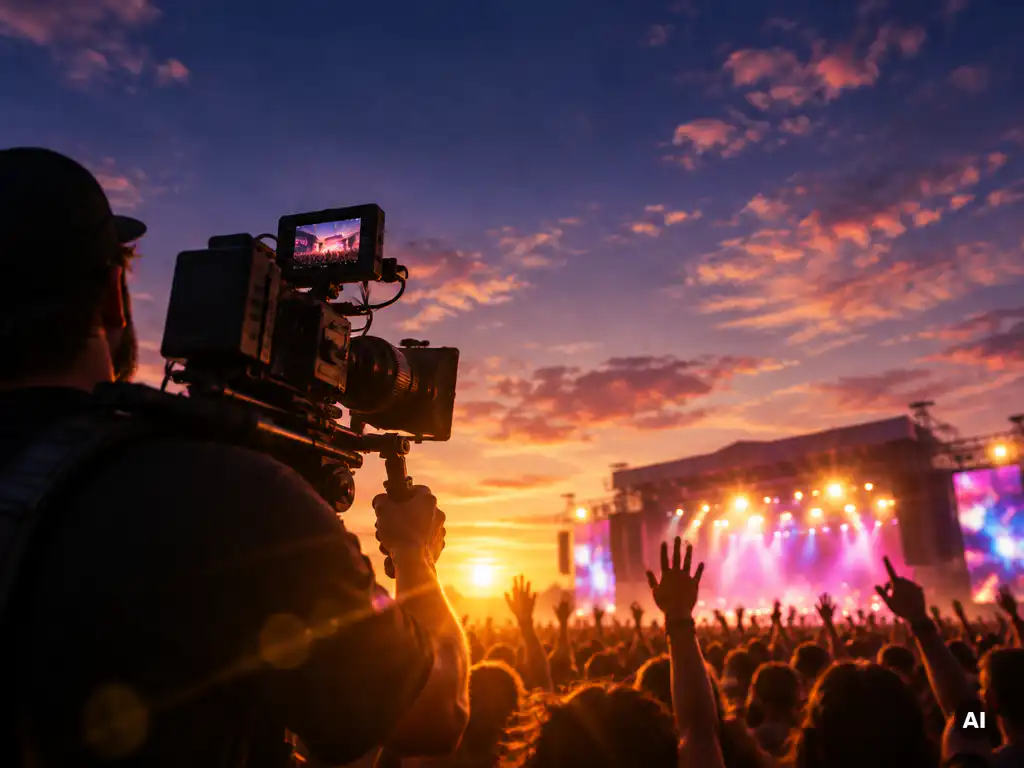
Festival organizers invest in video content every year because it extends the festival’s reach beyond the physical site, creates sponsor value, and produces footage that keeps working long after the last stage goes dark. Video turns a few days of live experience into a year-round audience asset.
The strongest festival video production strategies treat footage as a long-term media asset rather than a one-off expense. Below, we answer the key questions organizers ask when deciding how much to invest.
How does festival video extend reach beyond the site?
Festival video extends reach by putting the experience in front of people who never entered the grounds. Livestreams, daily recaps, and social clips reach fans at home, international audiences, and media partners, turning a capacity-limited event into one that anyone with a screen can follow.
A festival site has a fixed capacity, but a broadcast does not. Live distribution can run over IP, satellite, or HTTP streaming, and it can reach broadcasters, streaming platforms, and your own channels at the same time. Tomorrowland shows what this looks like at scale, having grown into an international phenomenon streamed by tens of millions of viewers. You can see how that partnership works in our Tomorrowland production case.
Reach also compounds over time. A viewer who watches a livestream in July may become a ticket buyer the following year, and an aftermovie keeps the festival visible through the off-season.
Which video formats give festivals the most value?
The most valuable festival video formats are livestreams, live screen feeds on site, daily recaps, full live sets, aftermovies, and vertical-native clips for mobile platforms. Each serves a different purpose, so most festivals combine several rather than relying on a single format.
Here is how the main formats compare:
- Livestreams and broadcasts: deliver the experience in real time to remote audiences and media partners.
- Live screens (IMAG): give visitors at the back of the crowd a close view of the stage.
- Daily recaps: keep momentum going across a multi-day event and feed social channels.
- Full live sets: become long-lasting content that fans return to for years.
- Aftermovies: capture the atmosphere and work as the main promotional asset for the next edition.
- Vertical-native video: is shot and framed for mobile-first platforms rather than cropped from a horizontal master.
Vertical deserves special attention. Cropping a widescreen shot into a vertical frame usually loses the subject or the energy. Content filmed natively for vertical looks intentional and performs better in feeds built around that format.
How does video content create value for sponsors?
Video creates sponsor value by giving brands visible, repeatable exposure inside content that audiences actually want to watch. Logos on screens, branded segments, and sponsored livestreams reach both the on-site crowd and the remote audience, which widens what a sponsorship package can offer.
Sponsors increasingly ask what they receive beyond a banner at the entrance. Video answers that question in several ways. Live screens carry brand moments to the whole crowd. Broadcasts and recaps carry that visibility to people who were not there. Footage can also be edited into sponsor-specific content that the brand uses on its own channels.
The key is planning this early. When the production team knows which sponsor activations need coverage, the crew can capture them deliberately rather than hoping the right shot happens by accident.
Can festival footage be reused across multiple years?
Yes, festival footage can be reused across multiple years when it is captured at high quality, organized, and archived properly. Reused footage supports promotion, sponsor decks, retrospectives, and anniversary content, which lowers the effective cost of each edition’s production over time.
Reuse depends on how well the material is managed from the start. Consider these steps:
- Capture in a high-quality format with enough dynamic range to hold up in future edits.
- Tag and catalog footage by stage, artist, date, and content type.
- Store it in reliable, redundant archives with clear access rules.
- Confirm artist and rights clearance covers the intended reuse before publishing.
Rights deserve attention. Artist clearance determines whether a live set can be published, for how long, and on which platforms, so it should be settled before the festival rather than after. Without a proper archive and clear rights, even excellent footage often goes unused.
Should festivals outsource video production or build in-house?
Most festivals benefit from outsourcing the technical production and keeping strategy and brand direction in-house. Broadcast infrastructure, multicamera crews, and live workflows are specialized and used only a few days a year, so a dedicated external partner is usually more efficient than a permanent team.
Building in-house means carrying salaries, equipment decisions, and training year-round for an event that lasts days. It also limits you to the skills of your own team. An independent production partner can select the right crew and technology for each edition and scale up or down as the project demands.
A hybrid model often works best. Your internal media or marketing team owns the story, the sponsor relationships, and the publishing calendar. An external technical partner handles cameras, live direction, broadcast delivery, and media management. Outsourcing makes particular sense for multi-stage festivals, where complexity and the risk of a technical failure are highest.
How do organizers measure the return on festival video?
Organizers measure the return on festival video by comparing production cost against concrete outcomes: viewership, engagement, sponsor satisfaction, ticket demand for the next edition, and the long-term value of reusable footage. No single number captures it, so a combined view is most reliable.
Useful indicators include:
- Livestream viewers and watch time across platforms
- Social engagement and follower growth during and after the event
- Sponsor feedback and renewal rates
- Pre-sale and ticket interest following aftermovie releases
- The number of times archived footage is reused in later campaigns
Set your measurement goals before the festival, not after. If you know that sponsor visibility and next-year ticket interest matter most, you can brief the production team to capture the right content and track the right metrics. Be careful about expecting guaranteed growth from any single video. Results depend on content quality, distribution, and the strength of the festival’s existing audience.
How CK Productions helps with festival video production
At CK Productions, we act as an independent technical production partner for festivals, selecting the right crew and technology for each project rather than being tied to fixed equipment or creative teams. We work as an extension of your own media department.
Our support typically includes:
- Multicamera and cinematic large-sensor production across multiple stages
- Livestreaming and broadcast delivery to media partners and platforms
- Live screen production for on-site audiences
- Vertical-native video for mobile-first channels
- Media management, archiving, and coordination of artist rights clearance with partner companies
We have supported festivals such as Tomorrowland, Pukkelpop, Les Ardentes, and Rampage, and we also work on smaller, technically demanding productions. If you want your next festival video to deliver reach, sponsor value, and footage you can reuse for years, contact CK Productions to discuss your project.
Frequently Asked Questions
How early should I start planning festival video production?
Ideally, start planning 6 to 9 months before the festival, especially for multi-stage events with livestreams or broadcast partners. Early planning gives you time to define goals, map out sponsor activations that need coverage, settle artist rights clearance, and choose the right crew and technology. Last-minute planning usually means fewer options and higher risk of technical gaps.
What should I include in a brief for a video production partner?
Share your festival’s key objectives (reach, sponsor value, footage reuse), the stage layout and schedule, the formats you need (livestream, IMAG, recaps, aftermovie, vertical clips), and your distribution channels. Add a list of sponsor activations that need deliberate coverage, any known artist clearance limits, and your preferred metrics for success. The clearer the brief, the better the crew can plan camera positions, workflows, and delivery.
What if some artists don't allow their sets to be filmed or published?
This is common, so address it well before the festival. Ask your production partner to flag restricted artists in the coverage plan so cameras and live screens handle them correctly, and agree in advance on what can be shown live, what can be archived, and what can be published afterwards. For artists who allow limited use, clarify duration and platforms in writing so your recaps and aftermovie stay compliant.
How can a smaller festival get value from video without a large budget?
Prioritize the formats that give the most return for your goals, such as a strong aftermovie and a set of vertical-native clips for social media, rather than trying to cover everything. Plan shots around your key moments and sponsor activations, and make sure the footage is cataloged and archived so you can reuse it in future campaigns. You can then add formats like daily recaps or livestreams in later editions as your audience and sponsor interest grow.
What are the most common mistakes festivals make with video content?
Typical mistakes include settling artist rights too late, failing to tag and archive footage so it never gets reused, and cropping horizontal footage into vertical instead of filming natively for mobile. Another is not telling the production team which sponsor moments matter, so those shots are missed. Defining measurement goals before the event also helps you avoid collecting content that doesn’t support your objectives.
How do I make sure archived footage stays usable years later?
Capture in a high-quality format with enough dynamic range for future edits, and keep metadata such as stage, artist, date, and content type attached to every clip. Store the material in redundant archives (for example, multiple copies in separate locations) with clear access rules. Review the archive periodically and record the rights status of each asset so your team knows exactly what can be reused and where.
How do I split responsibilities between my internal team and an external video partner?
A practical approach is to keep strategy, brand voice, sponsor relationships, and the publishing calendar in-house, while the external partner handles cameras, live direction, broadcast delivery, and media management. Agree on a single point of contact on each side and a shared timeline covering pre-production, on-site days, and post-event delivery. This keeps decision-making fast during the festival and avoids overlapping or missing tasks.
Related Articles
- Can festival footage help you sell more tickets next year?
- What should festival organizers know before hiring a video crew?
- How does festival video production work from planning to edit?
- How do you film a festival in 2026 without disrupting guests?
- When should you start planning video coverage for your festival?